
The smell of an old leather jacket. A grandparent’s cologne. Sunscreen on a summer beach. These scents do not just smell like something. They transport you. Few things in our sensory experience are as immediate or as emotionally loaded as a familiar fragrance, and that is not coincidence. Understanding why scent triggers memory the way it does gets to the heart of how the human brain is wired. It is one of the most fascinating intersections of fragrance basics and neuroscience — and once you understand it, the way you think about perfume changes entirely.
Table of Contents
The Short Answer: Smell Takes a Different Route to the Brain
Unlike every other sense, smell bypasses the thalamus entirely. Sight, sound, taste, and touch all pass through the thalamus first – the brain’s central relay station – before reaching the areas that process emotion and memory. Smell does not.
Scent molecules travel from the nose directly to the olfactory bulb, which sits in immediate physical proximity to the amygdala (emotional processing) and the hippocampus (memory formation). This direct neural shortcut is why a single whiff of something familiar can bypass conscious thought altogether and land you immediately in a memory from twenty years ago.
Every other sense requires that extra step. Smell does not, and that distinction matters enormously for why fragrance hits the way it does.
What the Olfactory Bulb Actually Does

The olfactory bulb is the brain’s first processing station for smell. When you inhale a scent, aroma molecules bind to olfactory receptors lining the nasal cavity. Those receptors fire electrical signals directly to the olfactory bulb, which then forwards those signals along two paths simultaneously: to the amygdala and to the hippocampus.
The amygdala processes emotional responses. The hippocampus handles memory encoding and retrieval. Both receive the scent signal at essentially the same time. This is why smell-triggered memories almost always arrive with an emotional charge already attached – the emotion and the memory are not processed separately. They arrive together.
This is fundamentally different from, say, hearing a song from your past. Music reaches the brain’s emotional centers through an indirect path, which is why music-triggered nostalgia tends to feel more like a slow wave. Scent-triggered memory tends to feel more like a jolt: immediate, vivid, and inseparable from the feeling itself.
The Proust Effect: When Science Has a Literary Name
The scent-memory connection is well-documented enough to have its own cultural name: the Proust Effect. It comes from French novelist Marcel Proust, who wrote one of the most famous passages in literature about how the smell and taste of a madeleine biscuit dipped in tea instantly transported him back to his childhood in Combray – not as a distant recollection, but as a fully immersive experience.
Researchers have since confirmed what Proust described. Studies in olfactory neuroscience consistently find that smell-triggered memories tend to be more emotionally vivid than memories triggered by other senses, more strongly tied to a specific time and place, and more likely to retrieve experiences from early childhood.
That last finding is particularly notable. Odor-evoked memories tend to skew toward the first decade of life, a phenomenon researchers sometimes call the “reminiscence bump” for scent. Scent encoding begins early, and it holds long. The reasons are not fully understood, but the pattern shows up reliably across studies.
For anyone interested in the formal science, the Nobel Prize in Physiology or Medicine was awarded in 2004 to researchers Linda Buck and Richard Axel for their discovery of olfactory receptors and the organization of the olfactory system. Their work established much of the structural foundation for what we now understand about how smell connects to emotion and memory.
Why Perfume Is So Personal
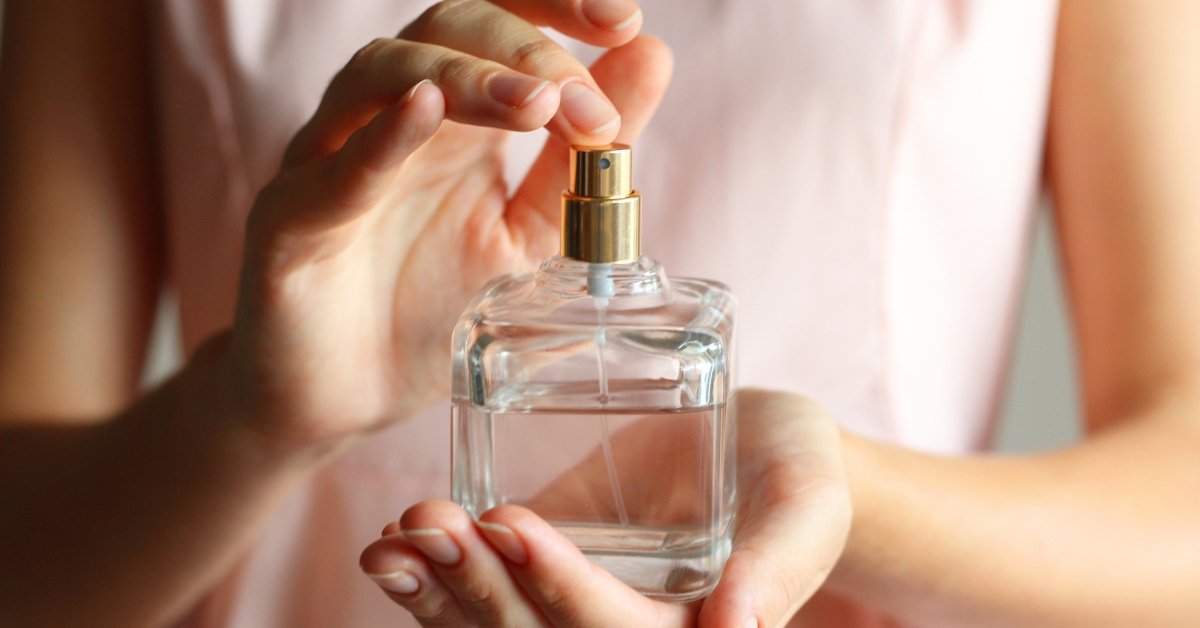
This neuroscience explains something every fragrance enthusiast has experienced: the same perfume can mean completely different things to different people.
A fragrance is not just its notes. It is the accumulated emotional associations it carries for the person wearing it. Vanilla might mean warmth and comfort to someone who grew up baking with a parent. To someone else, that same note could call up a less welcome memory. Neither response is wrong. It is the limbic system working exactly as designed.
This is also why choosing a perfume is rarely just about whether something smells pleasant on a paper blotter. Over time, you are building a scent into your own emotional memory. A fragrance worn through a significant period of life becomes anchored to that chapter. Decades later, catching it on someone else in a room can pull the entire thing back.
Understanding the language of what you are smelling makes this process more intentional. The Complete Fragrance Glossary is a useful reference for anyone who wants to understand the vocabulary behind the notes, families, and structures that make up the fragrances they are drawn to.
Olfactory Fatigue: Why You Stop Smelling Your Own Perfume
There is a closely related phenomenon that comes up constantly in fragrance conversations: you apply a scent in the morning, love it, and by midday you can barely detect it on yourself. But everyone around you can still smell it clearly.
This is olfactory fatigue, also called olfactory adaptation. The brain is wired to pay attention to change and filter out constants. A smell that has been present for hours becomes background noise – your olfactory receptors literally reduce their sensitivity to it over time. The fragrance has not disappeared. Your brain has simply decided it no longer needs to keep reporting it, because nothing has changed.
This is different from the fragrance fading. It is a neurological response, not a product failure. The practical implication: resist the urge to over-apply. A quick step outside into fresh air gives your receptors a brief reset, and the scent will often feel noticeable again within minutes.
How Scent Memories Are Actually Formed
Scent memories are not formed the way factual memories are. When you learn a fact, your brain stores it through a process called explicit memory encoding. You can retrieve it deliberately and describe it in words.
Scent memories are largely implicit. They form through lived experience and emotional association rather than conscious effort. You do not decide to associate a particular fragrance with safety, or grief, or falling in love. That association happens automatically, through repeated co-occurrence of the smell and the emotional state at the time.
Because they are anchored in emotion, scent memories tend to be highly durable. Research consistently shows that odor-cued memories are among the most stable in long-term storage. Emotional events are always encoded more deeply than neutral ones, and scent almost always carries emotional context when it is first encountered.
This is worth holding in mind when perfumers talk about “wearability.” A fragrance that earns consistent, everyday wear has the chance to become embedded in a person’s identity and history in a way that a fragrance worn once or twice simply cannot.
What This Means for How You Choose and Wear Fragrance
The scent-memory relationship changes the calculus around fragrance in some practical ways:
On choosing a signature scent
Wearing a consistent fragrance over time builds it into your personal history. That is either a beautiful thing or a cautionary one, depending on how mindfully you choose. A scent worn through your twenties becomes inseparable from that decade. That is worth considering before you default to whatever is on promotion.
On gifting fragrance
A perfume given at a significant moment has a chance to become permanently tied to that memory for the recipient. Few gifts carry that kind of staying power. It is also why receiving the wrong fragrance at the wrong time can feel oddly jarring – the association starts forming whether you choose it or not.
On testing before buying
Because perfume is so tied to emotional memory and personal chemistry, there is genuine value in wearing a scent before committing to a full bottle. The way it develops over hours on your skin, and whether it starts to feel like you, matters more than the first impression off the cap. Perfume sampler kits are one of the most practical ways to explore without committing to something you will wear for years.
On re-wearing old favorites
If a fragrance brings up difficult memories, that is a legitimate reason to retire it, even if it smells objectively beautiful. Your nose is not being irrational. The association is real, and it is not going anywhere. Moving on from a scent is sometimes as meaningful as choosing a new one.
The Human Nose Is More Powerful Than You Think

One of the most surprising findings in modern olfactory research is just how capable human smell actually is. For a long time, the common assumption was that humans had a relatively weak sense of smell compared to other mammals. That has largely been revised. Research published in Science estimated that the human nose can detect over one trillion distinct scent combinations, a figure that places our olfactory capabilities far beyond what was previously assumed.
What makes this especially interesting in the context of fragrance is that our sensitivity is not evenly distributed. We are extraordinarily sensitive to some molecules – the compounds that make petrichor (the smell of rain on dry earth) detectable at parts per trillion, for instance – and relatively insensitive to others. The way our olfactory receptors respond is shaped partly by genetics, partly by exposure, and partly by the emotional associations we have built over a lifetime.
This individual variation is part of why perfumery is such a personal discipline, and why the same fragrance can be transcendent to one person and unremarkable to another. There is no universal nose.
Scent, Identity, and the Fragrances That Stay With Us
The scents that mark the turning points in our lives tend to stay encoded with unusual clarity: the smell of a hospital on the day of a birth, the cologne of someone you loved and lost, the fragrance you wore on the first day of a job that changed everything. These are not coincidences of chemistry. They are records.
This is perhaps the most compelling argument for approaching fragrance with some intentionality. The fragrances you live in become part of how you remember your own life. That is not a small thing to leave entirely to chance.
For fragrance to be meaningful rather than merely decorative, it helps to understand what it is actually doing, at the neurological level, every time it reaches you. The route from nose to limbic system takes milliseconds. The impression it leaves can last a lifetime.


One comment on “Why Scent Triggers Memory More Than Any Other Sense”
Comments are closed.