Every fragrance comes with its own language, and if you have ever felt lost reading words like “sillage,” “chypre,” or “drydown,” you are far from alone. This fragrance glossary exists to change that. Whether you are new to the world of scent or just want to speak about perfume with more confidence, understanding Fragrance Basics is the foundation for everything: from choosing a new bottle to reading a review without needing a decoder ring. Bookmark this page and return whenever a term leaves you puzzled. It will always be here.
Table of Contents
The Anatomy of a Fragrance: Notes and Layers
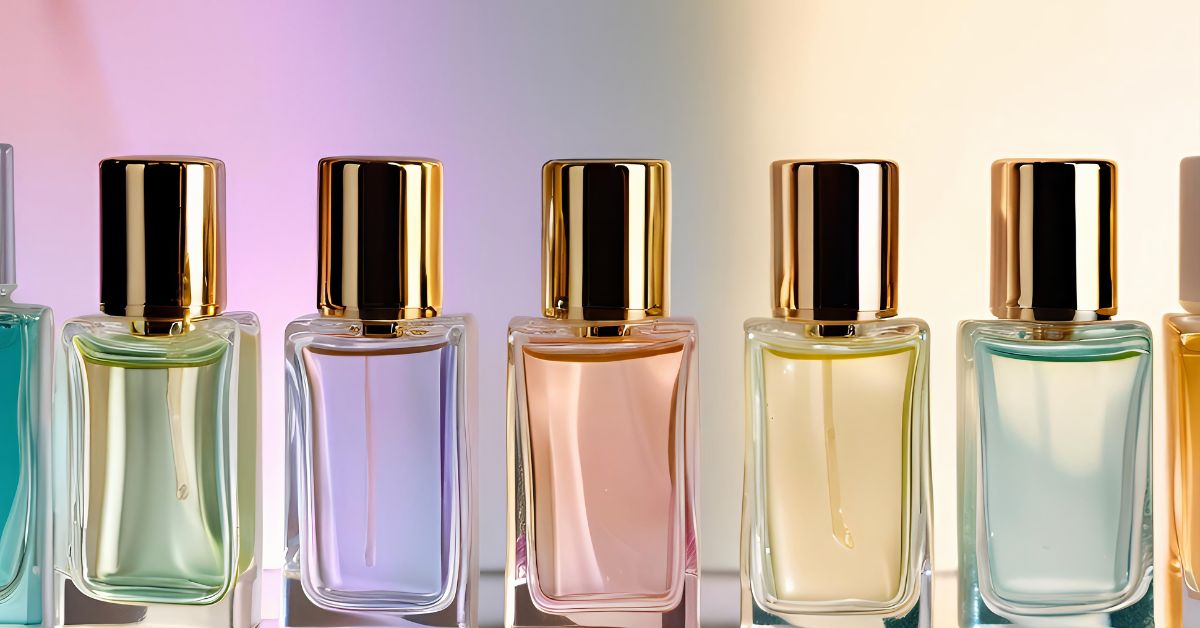
The structure of a fragrance is often the first thing that trips beginners up, but the logic behind it is surprisingly straightforward once you understand the framework.
Top notes are what you smell immediately after applying a fragrance. They are light and volatile, evaporating within the first 15 to 30 minutes. Citrus, light herbs, and airy florals are common top note materials. They shape your first impression of a scent but are not what you will be wearing for the rest of the day.
Heart notes (also called middle notes) emerge as the top notes fade and form the emotional core of a fragrance. They typically last from 20 minutes to several hours and are where the real character of a perfume lives. Rose, jasmine, cinnamon, and cardamom are classic heart note ingredients.
Base notes are the deep, long-lasting foundation of a fragrance. They anchor everything and provide longevity. Musks, woods, resins, and vanilla are typical base note materials. They often persist on skin and fabric long after the top and heart notes have faded, sometimes for an entire day.
The drydown is the phase of wear when a fragrance fully settles onto your skin, usually within the first hour or two after application. Many perfumes smell noticeably different during the drydown than they did at the opening, often evolving into something warmer and more intimate. If you want to explore fragrances celebrated specifically for this quality, these perfumes that smell better as they dry down are worth your attention.
An accord is a harmonious blend of multiple fragrance ingredients that together create a distinct, unified smell. You will often see “woody accord” or “rose accord” in fragrance descriptions. This signals that the note was constructed from several materials working together rather than a single raw ingredient.
Recommended:
Concentration Terms: EDP, EDT, and What They Actually Mean
The abbreviation after a fragrance name tells you how much perfume oil has been diluted into alcohol. This directly affects strength, longevity, and price. For a thorough breakdown of how concentrations affect real-world performance, this guide on fragrance concentrations covers it in detail.
Extrait de Parfum (also called Pure Parfum) contains the highest concentration of fragrance oil, typically 20 to 40 percent. It is the richest, longest-lasting form and usually the most expensive. A small amount goes a long way.
Eau de Parfum (EDP) sits at around 15 to 20 percent concentration. It has strong performance and suits daily wear well, making it one of the most popular formats on the market.
Eau de Toilette (EDT) typically contains 8 to 15 percent concentration. Lighter than an EDP, it is often favored for daytime or warm-weather use and tends to project more softly.
Eau de Cologne (EDC) usually ranges from 3 to 8 percent. The word “cologne” is widely misused as a synonym for men’s fragrance, but in the industry, it strictly refers to this lower concentration level and applies to any fragrance, regardless of gender.
Eau Fraiche is the most dilute form, typically 1 to 3 percent, often with more water than alcohol. It is featherlight and suits sensitive environments or very hot weather.
Performance Terms: Sillage, Longevity, and Projection
These are the words fragrance reviewers use to evaluate how a scent performs once it is on skin. Understanding them helps you cut through marketing language and read reviews like an enthusiast.
Longevity refers to how long a fragrance lasts on your skin before becoming undetectable. Dry skin tends to absorb fragrance more quickly than oily skin. Concentration, skin chemistry, and the raw materials in the formula all play a role.
Projection describes how far from your body a fragrance radiates. High projection fills a room; low projection stays close to the skin. Neither is better by default: context and personal preference determine which you want.
Sillage (pronounced see-yazh) is the French word for “wake,” as in the trail left by a boat on water. In fragrance terms, it describes the scented trail you leave behind as you move through a space. It is related to projection but slightly distinct: projection is about radiance when you are stationary, while sillage is about what lingers after you have passed.
Skin close (sometimes called intimate) describes a fragrance that sits close to the body with minimal radiance outward. Many people actively prefer this quality, particularly for professional settings or personal moments.
A scrubber is community shorthand for a fragrance so unpleasant to the wearer that they immediately wash it off. This is not an objective judgment about quality, only a subjective response to a mismatch between skin chemistry and personal preference.
Fragrance Families and Key Style Terms
Fragrance families group perfumes by their dominant olfactory character, and understanding them is one of the fastest ways to identify what you are likely to enjoy. Our Fragrance Families Explained guide covers this topic in full. Here we focus on specific style terms you will encounter within and around those families.
Chypre (pronounced sheep-ruh) describes fragrances built on a classic accord of bergamot, labdanum, and oakmoss. It is an old, sophisticated structure found throughout classic perfumery. Modern chypres often substitute synthetic materials for oakmoss, because natural oakmoss is now restricted under safety guidelines issued by the International Fragrance Association (IFRA).
Fougere (pronounced foo-zhair, French for fern) is a stylized accord centered on lavender, coumarin, and oakmoss. It does not actually smell like fern but forms the structural backbone of many classic masculine-leaning fragrances.
Gourmand refers to fragrances that evoke edible notes: vanilla, chocolate, caramel, coffee, and similarly warm or sweet ingredients. Done well, they do not smell like dessert was poured on your wrist but carry a rich, comforting warmth that many people find deeply appealing.
Aldehyde describes a class of synthetic molecules that produce a soapy, waxy, sometimes metallic brightness. Chanel No. 5 is the most famous example of an aldehyde-forward fragrance and helped define an entire era of modern perfumery.
Musk is a foundational fragrance ingredient originally derived from the musk gland of the musk deer. Today, virtually all musks used in perfumery are synthetic. They provide a soft, skin-like depth and appear in almost every fragrance category, primarily as fixatives and blenders.
Animalic describes notes that evoke animal-adjacent qualities: warm, raw, earthy, sometimes barnyard-like. Civet, castoreum, and ambergris were the original animalic materials. Most modern versions are synthetic. They appear in many classic powerhouse fragrances and remain polarizing by design.
Industry and Community Vocabulary
Spend any time in fragrance spaces on Reddit, Fragrantica, or YouTube, and you will encounter shorthand that insiders use without explanation. Here is what you need to know.
The Nose (capitalized) refers to the master perfumer who created a fragrance. Calling someone a nose is among the highest compliments in the industry.
A flanker is a fragrance released as a variation of an existing one, usually sharing the parent’s name with an added descriptor. Flankers are a common commercial strategy that capitalizes on an established reputation while offering something slightly new.
A decant is a small sample of a fragrance that has been transferred from the original bottle into a smaller atomizer for testing or sharing. Decants are how serious enthusiasts try dozens of fragrances without committing to full bottles.
A blind buy means purchasing a fragrance without having smelled it first. It is a calculated risk that enthusiasts take based on recommendations, reviews, or knowledge of a particular perfume house’s style.
SOTD stands for Scent of the Day and refers to whichever fragrance you are wearing on a given day. It is used as a hashtag and post format across fragrance communities worldwide.
A clone or dupe is a fragrance intentionally designed to closely resemble a more expensive original. The market for quality dupes has expanded significantly, and if you want to explore it with some guidance, this roundup of the best perfume dupes is a useful starting point.
Niche fragrances come from independent houses that prioritize artistic expression over broad commercial appeal. Designer fragrances come from large fashion or lifestyle brands and are made for accessibility and volume. The line between the two categories has blurred considerably in recent years, but the distinction still carries weight in community conversations.
Application Terms Worth Knowing
Pulse points are areas where blood vessels sit close to the surface of the skin and generate warmth: the wrists, inner elbows, sides of the neck, and behind the knees. Applying fragrance here helps it diffuse more effectively as the heat carries the scent outward.
Layering means wearing multiple fragrances or scented products simultaneously to build a personalized scent combination. This can mean two perfumes worn together, or a scented body lotion applied beneath a perfume to extend longevity and add depth to the base.
Maceration refers to the aging process that raw fragrance oil goes through after blending. A properly macerated fragrance has had time for its ingredients to fully integrate, producing a smoother, more cohesive result. You will see this term referenced most often in discussions of vintage perfumes or niche houses that take extra care before releasing a fragrance.
Fragrance has its own rich vocabulary because it is a rich subject. None of these terms are meant to exclude anyone. They are tools that make choosing, evaluating, and enjoying scent a more informed and confident process. Once you are comfortable with them, reading a review, understanding why a fragrance performs differently on your skin, or deciding between concentrations all become far easier. If you are still building your scent foundation from the ground up, the Fragrance Families Explained guide is a natural next step.




One comment on “The Complete Fragrance Glossary: Every Scent Term Explained”
Comments are closed.