Choosing a fragrance for a partner is often cited as one of the most stressful gift-giving experiences. The anxiety is well-founded: fragrance is deeply personal, biological, and context-dependent. Yet, most “Top 10” lists ignore the most important variable, the person receiving the bottle.
Generic guides fail because they prioritize hype over harmony. They suggest the best-selling perfume of the year without asking if your partner works in a scent-free office or if you’ve only been dating for three weeks. On Valentine’s Day, the stakes are higher because the gift is symbolic; it suggests how you perceive your partner and how you want them to feel. This valentine’s day fragrance gift guide is designed to eliminate the guesswork by focusing on decision logic over trends.
Table of Contents
How to Choose a Perfume for Valentine’s Day Without Guessing Wrong
The secret to how to choose a perfume for valentine’s day isn’t memorizing a list of ingredients; it’s understanding the psychology of scent association. We don’t just “smell” a perfume; we experience an emotional response based on our past experiences and current environment.
To get it right, you must weigh three technical variables:
- Skin Chemistry: How a scent interacts with their unique pH and lipid levels. A fragrance that smells like “creamy sandalwood” on paper may turn “sour” on skin depending on these biological factors.
- Emotional Intent: Do you want the gift to provide a sense of comfort, essentially a “second skin” effect, or spark attraction via high-contrast notes?
- Relationship Context: Is this a “getting to know you” scent or a “we share a life” scent? The “Safe vs. Seductive” framework helps navigate these milestones.
There is no universally “best” fragrance. Instead, there are two primary zones of gifting: Safe and Seductive. Understanding which zone fits your recipient is the key to success.
The “Safe” Valentine’s Fragrance Zone (Comfort, Familiarity, Low Risk)
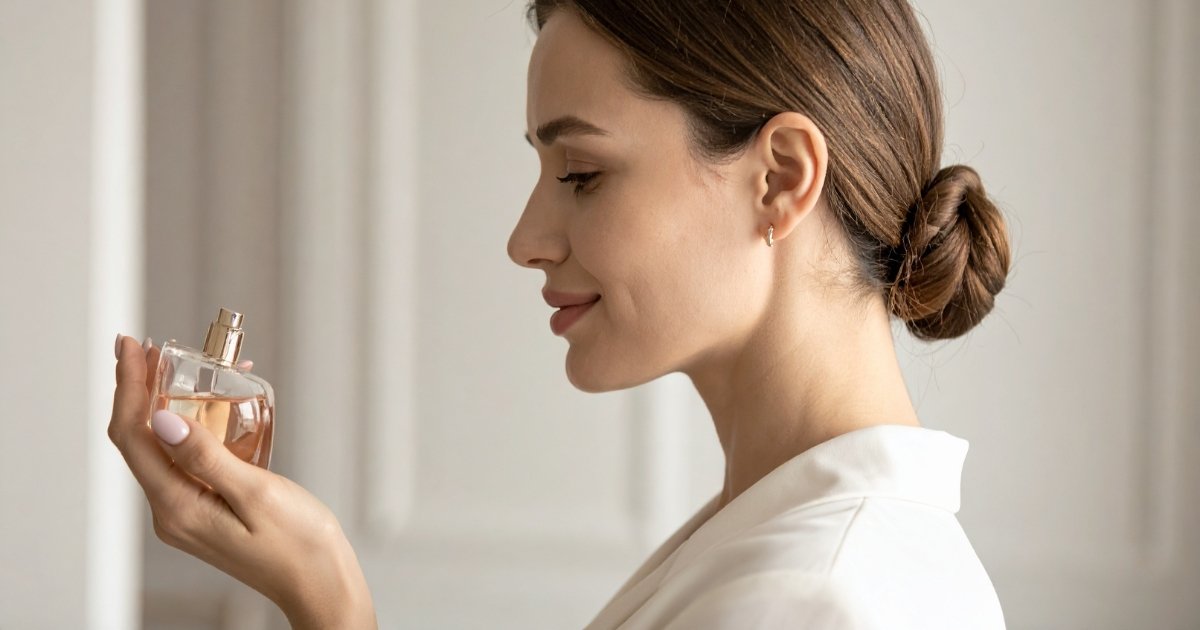
The “Safe” zone is for the gift-giver who wants to guarantee the recipient will actually use the bottle. These scents are designed to be approachable and universally pleasing, often relying on linear structures that don’t shift dramatically during wear.
What Makes a Perfume “Safe” as a Valentine’s Gift
A safe perfume to gift for valentine’s day usually falls into the “crowd-pleaser” category, utilizing high-quality synthetics that remain stable on various skin types. Look for:
- Clean Musks: Scents that mimic the smell of fresh laundry or warm skin. These are often labeled as “white musks.”
- Soft Woods: Light sandalwood or ISO E Super, a molecule that feels grounding and transparent but never heavy.
- Light Florals: Peony, freesia, or citrus-heavy neroli. These notes have high volatility, meaning they feel bright and airy rather than dense.
- Skin-close Projection: Fragrances with low “sillage,” meaning they stay within an arm’s length.
When You Should Choose a Safe Perfume
- New Relationships: You haven’t had enough time to learn their olfactory deal-breakers, such as an aversion to heavy white florals or sharp spices.
- Long-Distance Partners: When you want to send a scent that feels like a “hug,” something wearable at home or during travel.
- Uncertainty: If they rarely talk about perfume or have a very minimalist style.
- Daily Wearers: If they need something they can wear to professional environments or the gym without overwhelming their surroundings.
The Psychology Behind Safe Fragrances
Familiarity breeds liking. Scents that lean into “clean” or “soft” profiles reduce the risk of a biological rejection, such as headaches or nausea. In this context, “liked by many” isn’t a flaw, it’s a feature that ensures the gift becomes a daily staple rather than a decorative object on a dresser.
The “Seductive” Valentine’s Fragrance Zone (Emotion, Intimacy, Presence)
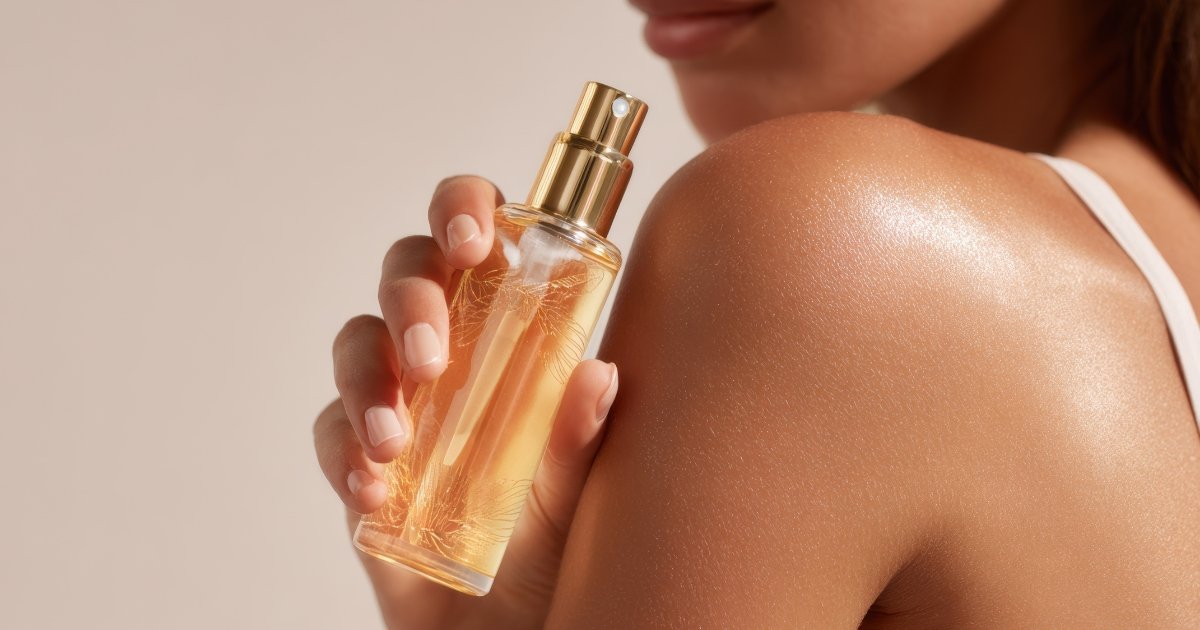
The “Seductive” zone is for those looking to make a statement. These fragrances are designed to linger, provoke a reaction, and create a lasting sensory memory through “heavier” molecules.
What Makes a Fragrance Seductive (Without Being Overpowering)
Seductive fragrances for valentine’s day are more complex, often utilizing “base-heavy” notes that have a slower evaporation rate. They often feature:
- Warm Ambers: Resinous notes like labdanum or benzoin that feel “golden” and glowing.
- Vanilla and Gourmands: High-quality vanilla bean or tonka, which tap into primal “edible” associations and comfort-based attraction.
- Spices and Soft Leathers: Additions like saffron, cardamom, or suede that provide tactile depth.
- Sensual Musks: Ambroid or “salty” musks that mimic natural pheromones and human warmth.
When Seductive Fragrances Work Best
- Established Relationships: You already know their baseline and can afford to be bold with niche or “challenging” profiles.
- Evening-focused Gifting: If the gift is intended specifically for date nights or late-night events.
- Shared Physical Space: When the scent is meant to be part of your shared intimacy, acting as a private sensory language between you two.
Common Mistakes With Seductive Fragrances
The biggest pitfall is confusing “loudness” with sensuality. A truly seductive scent should invite someone in, not push them away. Avoid perfumes with massive “sillage” (scent trail) if your partner prefers a quiet lifestyle. Furthermore, never choose a “status” brand solely for its price point; a $400 bottle that clashes with their skin chemistry is objectively worse than a $100 bottle that harmonizes with it.
Safe vs Seductive — How to Decide in 60 Seconds
If you are struggling to categorize your partner’s preference, use this objective decision matrix to identify the correct olfactive path.
| Observation | Recommended Path | Why It Works |
|---|---|---|
| Dislikes strong smells or has allergies | Safe | Minimizes the risk of biological rejection. |
| Compliments your bold/darker scents | Seductive | Indicates a preference for depth and presence. |
| First Valentine’s Day together | Safe | Establishes a baseline without being polarizing. |
| Scent is central to your date nights | Seductive | Enhances intimacy through sensory memory. |
| Values utility and daily wearability | Safe | Ensures the gift is integrated into their routine. |
Valentine’s Fragrance Gifts by Relationship Stage
Matching the fragrance concentration and profile to the length of your relationship ensures the gift feels appropriate and technically sound.
| Relationship Stage | Recommended Concentration | Key Olfactive Goal |
|---|---|---|
| New (0-6 Months) | Eau de Toilette (EDT) | Approachability & Transparency |
| Established (1-3 Years) | Eau de Parfum (EDP) | Expressive Presence & Longevity |
| Long-Term (3+ Years) | Extrait de Parfum | Complexity & Deep Emotional Resonance |
The Science Behind Scent and Relationship Longevity
Research in social psychology and neurobiology supports a tiered approach to gifting fragrance. In the early stages of a relationship, the brain’s olfactory bulb processes new scents as part of a larger “social identification” phase. Studies on the Mere Exposure Effect suggest that approachable, “Safe” scents are more easily integrated into a positive early-stage impression.
As relationships deepen, the Proustian Phenomenon (scent-induced memory) becomes the dominant factor. Complex, high-concentration fragrances (like Extraits) are chemically designed with a higher percentage of “fixative” base notes. These notes persist on skin for 12+ hours, allowing the brain to create stronger, more detailed neural pathways associated with a long-term partner’s presence. This technical evolution from EDT to Extrait mimics the biological evolution from novelty to deep attachment.
Fragrance Gift for a New Relationship
The goal here is approachability and technical safety. A fragrance gift for new relationship should avoid polarizing notes like heavy oud, incense, or thick, “indolic” tuberose.
- Strategy: Opt for “Discovery Sets” from reputable niche houses. This removes the risk of a “blind buy” and turns the gift into an interactive experience where they can choose their own favorite.
Fragrance Gifts for Established Relationships
At this stage, you can move into more expressive profiles. You likely know if they love “sweet” or “earthy.” Look for scents that evoke a specific shared memory, perhaps the smell of the ocean from a recent trip or the citrus of a favorite cocktail.
Long-Term Partners and Signature-Level Gifts
For long-term partners, aim for complex compositions that take time to unfold. These are “slow-burn” fragrances. Think of these as “Signature-Level” gifts: perfumes that they might not wear every day, but that will always be associated with this specific chapter of your life together.
Blind-Buying a Valentine’s Fragrance — When It Works and When It Doesn’t

Blind-buying (purchasing without smelling first) is usually a gamble, but it can be done with expert-level precision.
- When it works: When you find a “flanker” (a variation) of a scent they already love, or when the notes are 90% similar to their current favorite (check for shared “accords”).
- When it doesn’t: When you are buying based solely on a beautiful bottle, a viral social media review, or a celebrity endorsement.
- Minimize regret: Check sites like Fragrantica for “reminds me of” sections to see if the scent is in their comfort zone. Always look for retailers that include a small 2ml sample vial with the full bottle so the recipient can test the scent before breaking the seal.
One Valentine’s Fragrance Is Enough — If You Choose the Right Type
In a world of “fragrance wardrobes,” there is a case for minimalism. A Valentine’s gift doesn’t need to be a daily workhorse. In fact, there is power in a fragrance that is only worn for special moments. Choosing a bottle with “emotional specificity” (one that is reserved for your time together) ensures that the scent becomes a powerful memory trigger for years to come. This is the difference between a “scent” and a “signature.”
Conclusion: Valentine’s Day Fragrance Gifts Are About Thought, Not Perfection
Ultimately, a well-chosen fragrance communicates that you have been paying attention to their biological preferences and lifestyle. Whether you choose a safe musk or a seductive amber, the value lies in the intention behind the choice. You aren’t trying to find the “best” perfume in the world; you are trying to find the one that resonates with the person standing in front of you.
Take the pressure off finding perfection. Focus on the context of your relationship, respect their boundaries with scent, and let the fragrance do the rest of the talking.
Frequently Asked Questions (FAQ)
What is the primary difference between a “safe” and “seductive” fragrance for gifting?
A safe fragrance typically utilizes high-volatility, airy notes like white musk or light citrus to ensure immediate likeability and daily wearability, whereas a seductive fragrance relies on dense, low-volatility base notes like amber or vanilla to create an intimate, long-lasting presence that demands more attention.
Is it better to buy a designer brand or a niche fragrance for Valentine’s Day?
Designer brands offer consistency and a “crowd-pleaser” profile that fits the Safe zone perfectly, but niche houses offer a unique “artistic signature” and higher oil concentrations that are better suited for Seductive, memory-focused gifting for established partners.
How do I determine someone’s skin chemistry without them trying the perfume?
While you cannot know the exact pH, you can observe their current favorites; if they gravitate toward “fresh” scents that disappear quickly, they may have drier skin that requires higher oil concentrations like EDPs to maintain longevity.
Should I avoid buying a “Safe” fragrance because it feels too generic?
Absolutely not, as in the early stages of a relationship, a safe fragrance acts as a “social lubricant” that prevents olfactory overwhelm and shows respect for the recipient’s personal space.
Can a seductive fragrance be worn during the day?
Yes, provided the concentration is managed; opting for an Eau de Parfum version of a seductive scent rather than a thick Extrait allows the wearer to enjoy deeper notes like sandalwood or spice in a professional or casual daytime setting without overwhelming others.
Glossary
- Sillage: The scent trail left by a perfume as the wearer moves through a space; high sillage means the fragrance “travels” further.
- Volatility: The speed at which a fragrance molecule evaporates; citrus and light florals have high volatility (short-lived), while ambers and musks have low volatility (long-lasting).
- Accord: A blend of several individual notes that lose their distinct identity to create a completely new, unified smell, much like a chord in music.
- Dry Down: The final phase of a fragrance’s wear time, usually appearing several hours after application, where the heavier base notes are most prominent.
- Linear Fragrance: A scent that smells essentially the same from the moment it is sprayed until it disappears from the skin, often preferred in the “Safe” zone for its predictability.
- Indolic: A term used to describe “heavy” or “fleshy” floral notes, such as jasmine or tuberose, that have an animalic, slightly overripe quality.
- Fixative: An ingredient used in a fragrance composition to slow down the evaporation of more volatile notes, effectively increasing the overall longevity.